
NGO LingvaLexa Activity Report for 2025
Key Achievements
1. Research Publication: "A New Weapon in the Shadows: How the Kremlin Uses Video Games for War Propaganda"
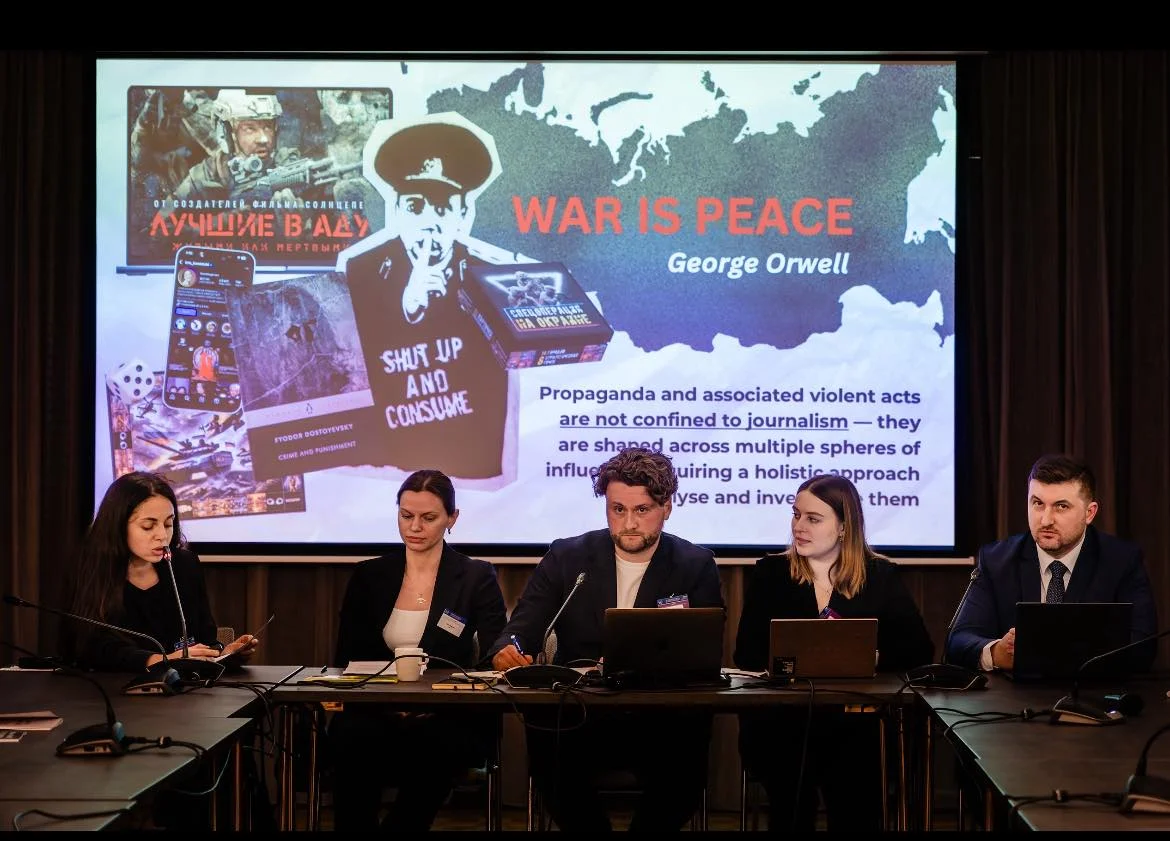
LingvaLexa prepared and presented a comprehensive study on the use of the video game industry as an instrument of Kremlin propaganda. The research examined how Russia integrates the video game industry into its propaganda machine – from state-funded projects and commissioned narratives to the creation of online communities promoting the "russian world" ideology. The study included case studies of games such as Squad 22: ZOV, Best in Hell, and others that reproduce narratives of Russian aggression and militarise youth. The research was presented at a public event at Khartiya Hub, at Taras Shevchenko National University of Kyiv, and in an online session for teachers hosted by the Space of Tolerance. All materials were published in open access for journalists, educators, and researchers of information operations.
 2. Expert and Analytical Support to Law Enforcement Agencies
During the reporting period, the organisation provided expert and analytical support to Ukrainian law enforcement agencies – the Office of the Prosecutor General, the Prosecutor's Office of the Autonomous Republic of Crimea and the City of Sevastopol, and the Mykolaiv and Donetsk Regional Prosecutor's Offices – in the investigation of war crimes and criminal offences related to propaganda. The organisation's specialists conducted search, analysis, and verification of information obtained through OSINT, prepared analytical materials, and developed evidence-grade datasets.
A separate area of work involved supporting the Donetsk Regional Prosecutor's Office in documenting war crimes committed by Russian armed formations in the Staromaiorske area in 2024. The collected materials contributed to identifying a person involved in crimes against Ukrainian service members and to notifying them of suspicion, as well as to the investigation of ill-treatment of fallen defenders and looting.
The organisation's specialists also participated in the collection and systematisation of open-source information in criminal proceedings related to the militarisation and indoctrination of Ukrainian children in the occupied territories. In May 2025, a court delivered a guilty verdict against the head of "KrymPatriotTsentr" Dmytro Polkovnykov for war crimes under Article 438 of the Criminal Code of Ukraine. The militarisation of children is part of Russia's systemic policy aimed at raising new generations in a spirit of chauvinism and sustaining its expansionist course.
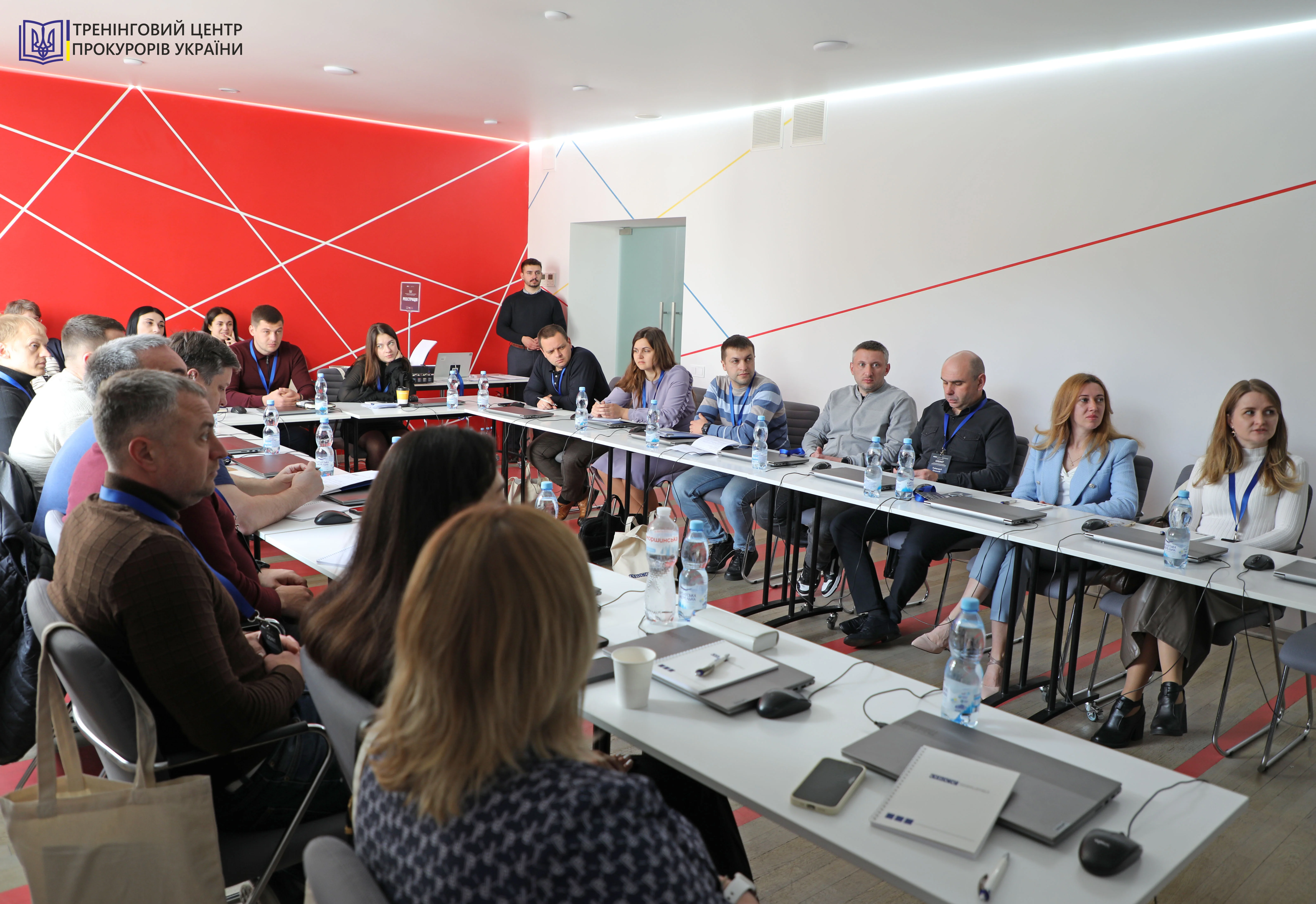 3. Series of OSINT Trainings on Investigating Cases of Missing Children
In May 2025, LingvaLexa conducted a series of specialised trainings for prosecutors as part of a project to strengthen analytical approaches to investigating crimes related to the disappearance of children under special circumstances. The trainings took place in a format of three two-day sessions (14-15, 21-22, and 28-29 May) for three separate groups of participants. The programme covered OSINT fundamentals and digital security, search via aggregators and photo analysis, GEOINT tools, working with open sources on Telegram, and practical OSINT investigation under the trainers' supervision. The event was implemented in partnership with the Prosecutor's Training Center of Ukraine and supported by the OSCE Support Programme for Ukraine.
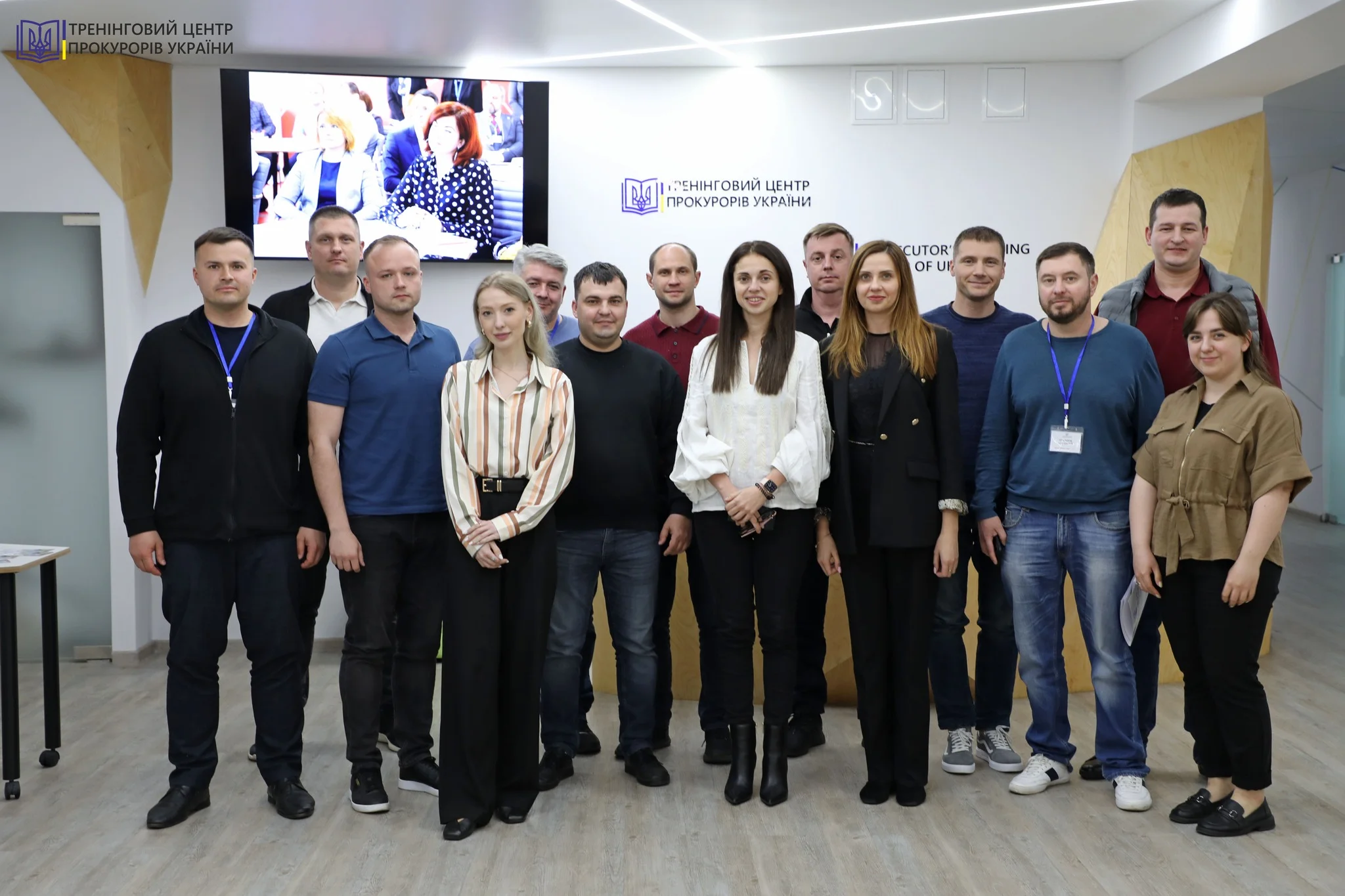 4. Trainings on Evidentiary Framework for Genocide
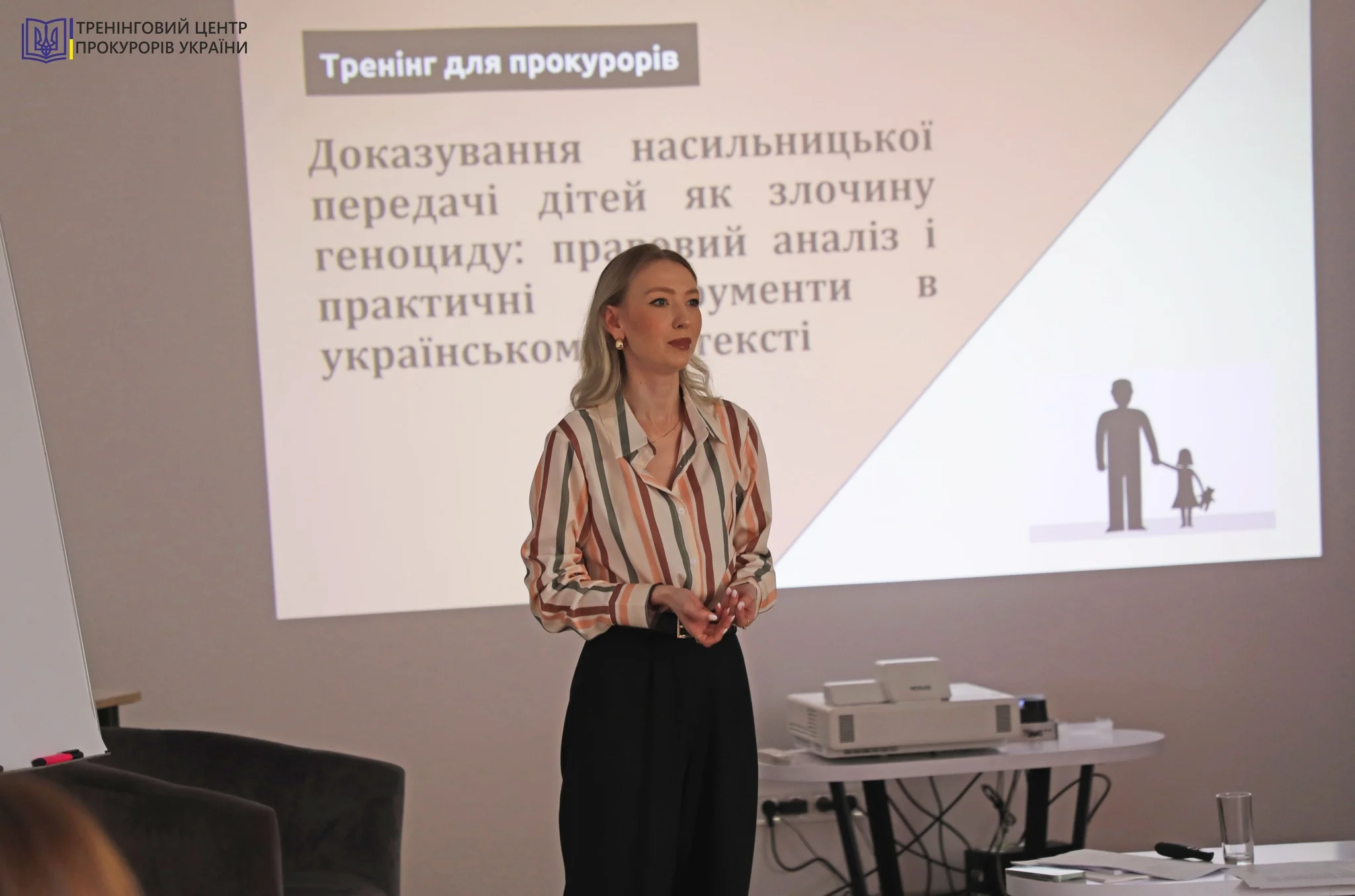
During 2025, LingvaLexa conducted two specialised two-day trainings for Ukrainian prosecutors responsible for investigating the most serious international crimes, in partnership with the Prosecutor's Training Center of Ukraine. In May, the training "Specifics of Evidentiary Framework for Genocide" covered genocidal intent, criteria for the destruction of a group, the rhetoric of incitement to genocide and methods of its documentation, and practical investigative tools. In September, the training "Genocide. International Practice and Contemporary Challenges" focused on international approaches to proving the crime of genocide, the actus reus and mens rea of the crime in the Ukrainian context, and potential challenges for the Ukrainian side.
 5. Presentations at Academic and Legal Forums
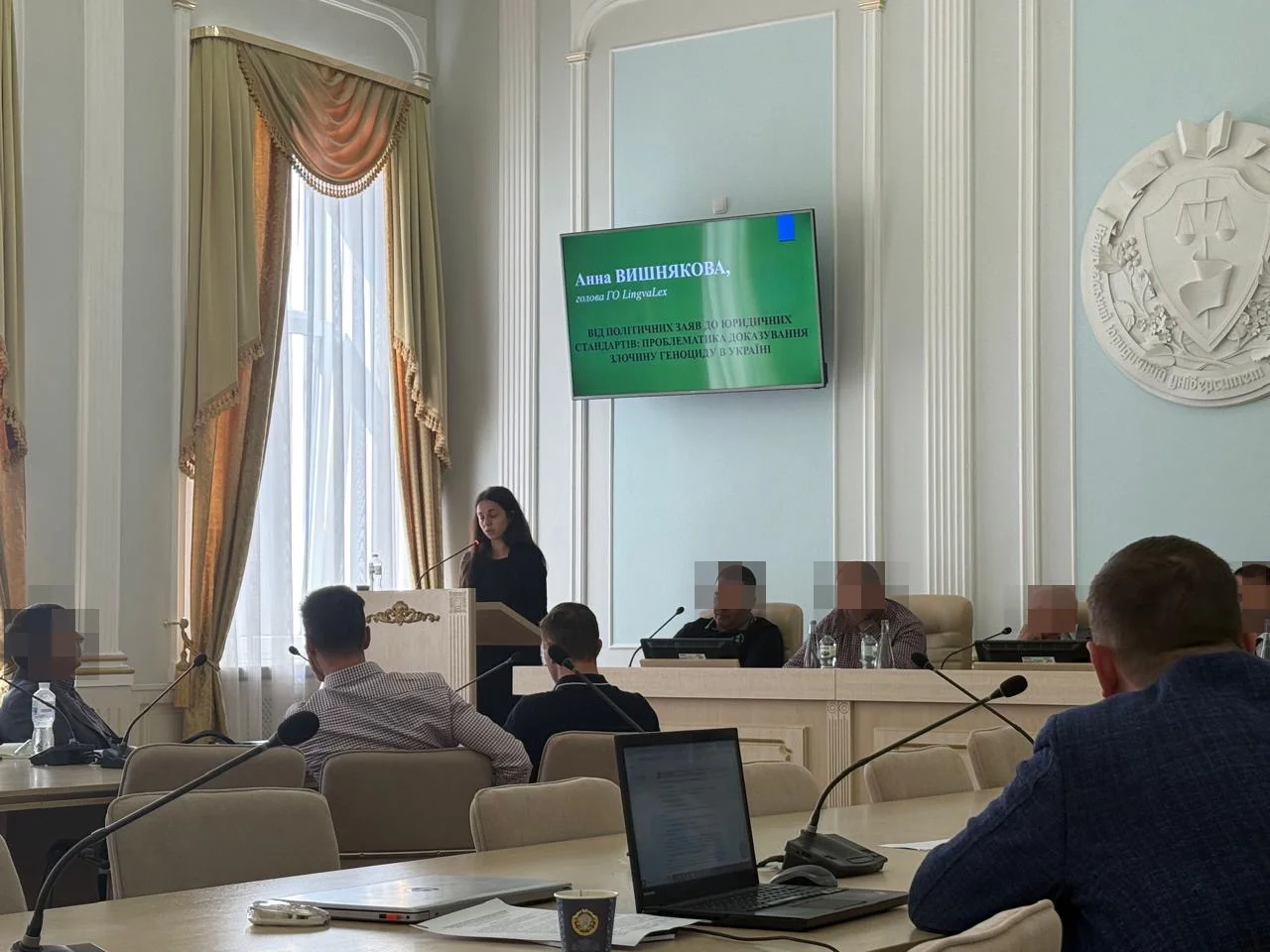
LingvaLexa Head Anna Vyshniakova and coordinator Kyrylo Dymov participated in the First All-Ukrainian Round Table on Investigating Crimes Related to Russia's Armed Aggression Against Ukraine, organised by the Institute of the Security Service of Ukraine. The presentation "The Leadership Requirement in the Crime of Aggression" analysed the limitations of the leadership clause in the Rome Statute and its significance for Ukrainian legal practice. Anna Vyshniakova also presented at the IX Kharkiv International Legal Forum with a paper titled "From Political Declarations to Legal Standards: The Challenge of Proving the Crime of Genocide in Ukraine", outlining the key challenges involved in moving from political qualifications to legally grounded evidence.
 6. International Representation
In August 2025, LingvaLexa participated in the international conference "International Humanitarian Law in the Context of Contemporary Challenges", organised by the Ministry of Foreign Affairs of Ukraine at the Diplomatic Academy on the occasion of the 76th anniversary of the Geneva Conventions. Anna Vyshniakova joined a panel discussion on the erasure of Ukrainian cultural identity and the use of propaganda as an instrument of war, alongside representatives of the Ministry of Culture, the Ukrainian Institute of National Remembrance, and the President's Representative in the Autonomous Republic of Crimea. At the end of the year, the organisation also contributed to a discussion at the European Economic and Social Committee (EESC) as part of the forum "Resilient Europe: Countering Russian Propaganda and Disinformation", which examined the mechanisms and scale of Russian information influence in EU countries and the development of Europe's cognitive resilience strategy.
In December 2025, LingvaLexa joined the Coalition for the International Criminal Court (CICC) – an international network uniting organisations in over 150 countries that plays a key role in advancing global justice. As part of the 24th Session of the Assembly of States Parties to the ICC (ASP24), the organisation co-organised a side event in partnership with the Office of the Prosecutor General of Ukraine and other organisations. Head Anna Vyshniakova presented on propaganda as a systemic element of international crimes, emphasising the need to build a complete chain of accountability – from media figures to editors, producers, and financiers of propaganda campaigns, all the way to the political decision-making centre in the Kremlin.
 General Conclusions
2025 marked a year of advancement for LingvaLexa – both in the quality of its work and in the scale of its impact. The organisation expanded its international presence by joining the Coalition for the ICC and presenting at the Assembly of States Parties. At the national level, training and analytical activities became increasingly systemic. New research directions – propaganda in video games, the militarisation of children, genocide – reflect the organisation's capacity to respond to contemporary challenges of information warfare. LingvaLexa continues to serve as a bridge between law enforcement agencies, the academic community, educators, and international platforms in the shared pursuit of accountability.